

From time to time, all of us will have carried artwork by one of Britain’s most celebrated sculptors in our pockets and purses without realising. This is because Raphael Maklouf’s best-known work is the third official coin portrait of Queen Elizabeth II, which graced British and Commonwealth coins from 1985 to 1997.
Born in Jerusalem on 10 December 1937, Maklouf emigrated to the UK with his family shortly after the end of the Second World War. They settled in London, where his father, Samuel, became a market trader. Young Raphael had developed an interest in drawing at a very early age despite battling a chronic eye disease. His parents sought treatment for him in England, which led to Raphael being admitted to a specialist children’s eye hospital in Swanley, Kent, for two years.
With parental visits restricted to just one hour a week and only able to speak very limited English, Raphael struggled at first to adjust to life in the hospital. However, he soon discovered that the hospital had an art room with clay and pottery, and it was there that he discovered a passion for sculpting. He began making clay portraits of the nurses and patients, which were well-received, boosting his confidence. By the time he left the hospital, he was cured.
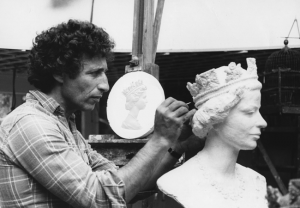
Maklouf’s passion for art led him to study at the Camberwell School of Art from the age of sixteen until 1958 where he honed his skills in sculpture and design. Following his graduation, he initially pursued a career in education and spent the next ten years lecturing in sculpture at various art schools, including Camberwell. While he did so, he acquired a growing reputation as a sculptor of remarkable sensitivity and detail.
Maklouf was made a Fellow of the Royal Society for the Encouragement of Arts, Manufactures and Commerce (FRSA) in 1977, and was elected an Associate of the Royal Society of British Sculptors in 1979.
In 1982, The Royal Mint invited seventeen artists to submit new designs of the Queen to be considered for the next official coin portrait. Thirty-eight models were considered by the Royal Mint Advisory Committee on the Design of Coins, Medals, Seals and Decorations.
In 1984, the Committee ultimately selected Maklouf’s design as the most promising to replace Arnold Machin’s coin portrait of the Queen, which had appeared on British coins struck since 1968. Following his selection, the Queen sat for Maklouf on two occasions to enable him to refine his design, which was approved on 8 August 1984. Four months later, on 1 January 1985, the first coins bearing the Maklouf portrait appeared in circulation.
The Queen’s third official coin portrait depicts the monarch wearing the Diamond Diadem; originally made in 1820 for the coronation of King George IV, and which also appears on British stamps. Unlike the Gillick and Machin portraits, Maklouf’s is couped (cut off) at the neck; it also includes a necklace and earrings, giving the portrait a regal, yet approachable, feel.
The public welcomed the elegant realism and dignified depiction of the monarch, although some critics did remark that Maklouf had depicted the fifty-eight-year-old Queen as ‘flatteringly young.’ The artist responded robustly, declaring that his critics had misunderstood his intention, which was to “create a symbol, regal and ageless.”
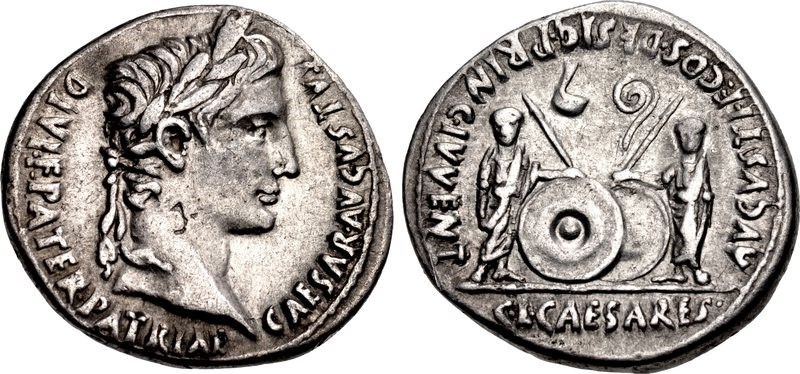
Maklouf's initials (RDM) appear on the truncation of the neck. He decided to add the initial of his middle name (David) so that his portrait would not be mistaken for the work of the coin artists working for The Royal Mint. His design was used on circulating and commemorative coins until 1997.
Maklouf’s coin artistry was not limited to the UK. His portrait of Queen Elizabeth II was adopted by numerous Commonwealth nations, including Australia, New Zealand and Canada, making it one of the most widely circulated images of the monarch in history. These coins, still cherished by collectors, reflect the high esteem in which Maklouf’s work is held internationally.
Beyond coinage, Maklouf’s sculpture portfolio is equally impressive. His works range from intimate portrait busts to large-scale public installations. Among his most notable pieces is the bronze bust of Sir Thomas More in the Crypt of St Peter ad Vincula in the Tower of London. Other prominent figures who have been immortalised in sculpture include HRH Prince Philip, Duke of Edinburgh, Sir Richard Attenborough, Lady Thatcher, Dame Joan Collins, Sir Michael Parkinson and footballer Sir Bobby Moore.
Maklouf is also well known for several ecclesiastical commissions, including statues for churches and cathedrals across the UK. This includes sculpting designs representing the fifteen Stations of the Cross in Brentwood Cathedral. One of his most recent works is a sculpture of William Shakespeare on a bench near the Globe Theatre in Southwark.
When the Tower of London approached Maklouf to request permission to create replicas of his statue of Sir Thomas Moore, it began a journey that ultimately led to the founding of Tower Mint in London in 1976. The private mint initially produced small bronze busts of Sir Thomas for the Tower gift shop; and when these sold out quickly, Maklouf expanded the operation to create a range of souvenir medals. This eventually led to the production of official legal-tender commemorative coins.
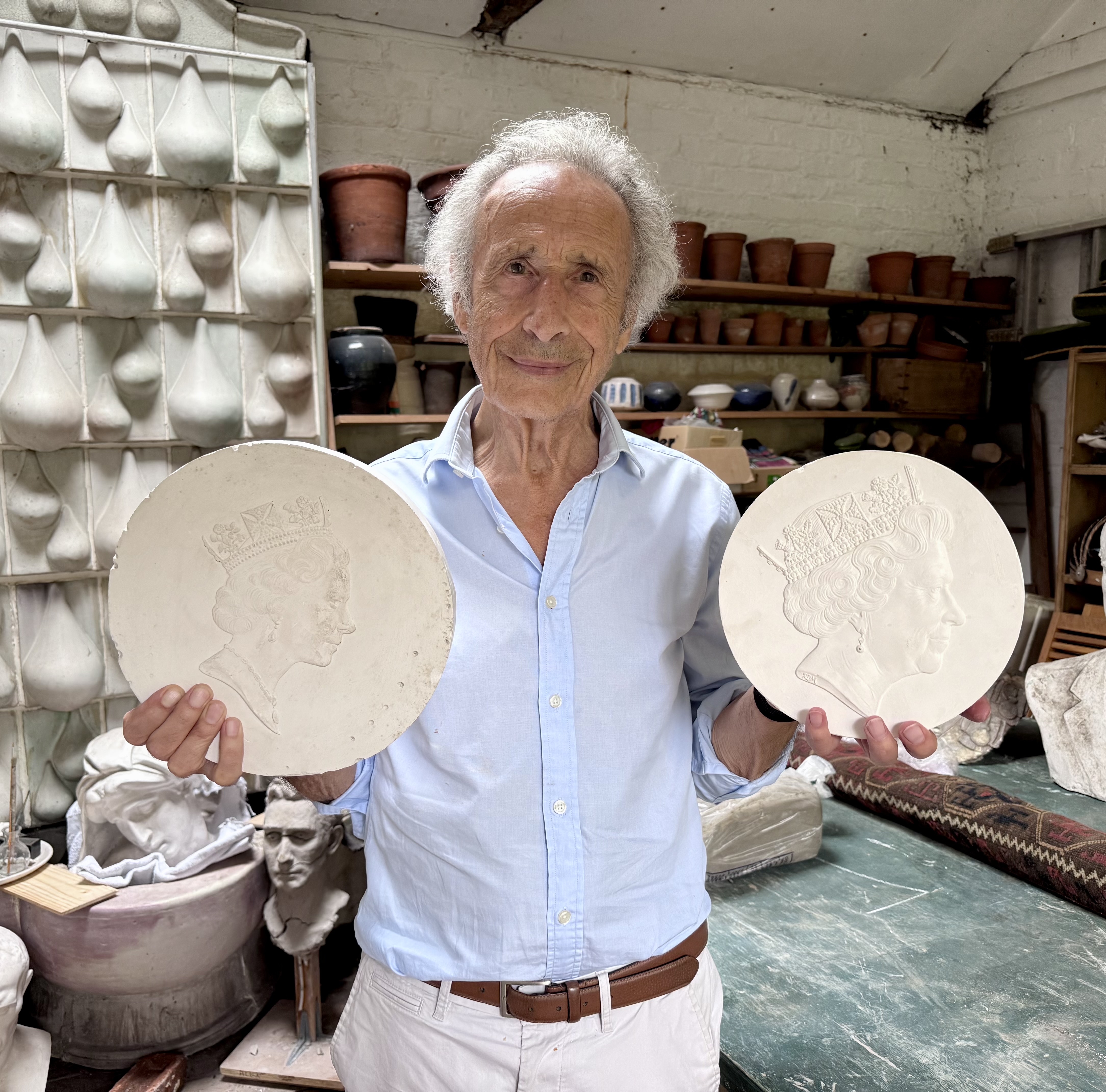
In 2016, Maklouf created a new coin portrait of Queen Elizabeth II in honour of her 90th birthday. The new portrait depicted a relaxed, smiling monarch wearing the Diamond Diadem and earrings from Maklouf’s earlier portrait and appeared on Gibraltar-issued coins. In 2022, Maklouf reworked the design to create the world’s first platinum portrait of a monarch to honour her Platinum Jubilee. Sadly, it was destined to be the last coin portrait of the Queen before her death in September that year.
Following the accession of King Charles III, Maklouf created a coin portrait of the new monarch for Gibraltar coinage. His design was unveiled at the World Money Fair in Berlin in February 2023 and has been acclaimed by industry experts for being arguably the most accurate likeness of the King to appear on coins to date. Maklouf now joins the nineteenth century engraver William Wyon and the twentieth century designer Humphrey Paget as artists who have created official coin portraits for successive monarchs.
Today, Raphael Maklouf continues to create great art. His ability to blend tradition with innovation, whilst giving his subjects a lifelike realism and emotional resonance, has made him a leading figure in the art world. We will find his artistry not only in our pockets, purses and coin collections, but also in galleries, public spaces, royal palaces and cathedrals.
One thing is certain. The spark of artistic genius which was first seen in a children’s eye hospital over seven decades ago is now firmly woven into the fabric of modern British culture, where it will remain for future generations to treasure and appreciate.