

The Tudor Rose: From Regal Unification to Modern Masterwork
On 28th October 1489, officials in the Tower of London received a royal instruction to produce “a new money of gold.” They rose to the occasion and presented King Henry VII with the largest gold coin ever struck in England.
The magnificent new coin was originally to be called a ‘double ryal,’ but the King personally chose the name ‘sovereign’ instead. It was an appropriate name for the chief coin of the realm, and the means by which the Tudor monarch would impress important visitors and showcase his credentials overseas.
It is unlikely that there was a real monetary need in England in 1489 for a coin worth twenty shillings (or one pound), and its use would have been largely ceremonial - designed to represent the dignity and wealth of the Crown whilst projecting an image of stability and financial security.
The design that appeared on the first sovereign reflected this intention. Its obverse bore an impressive portrait of the crowned King enthroned, wearing his coronation robes and holding the sceptre and the orb. The royal regalia was there to cement Henry’s position as the legitimate monarch following the brutal death of the previous incumbent, Richard III, on the battlefield at Bosworth three years earlier.
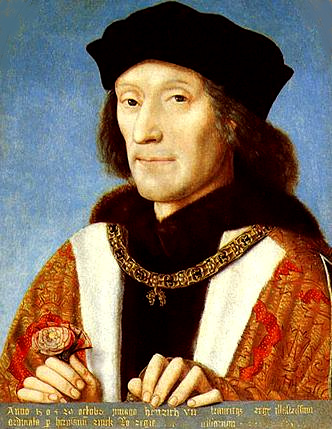
The reverse design bore a powerful declaration of unity: the Tudor Rose emblem was created in 1486 to celebrate the marriage of King Henry VII to Elizabeth of York. Their union brought an end to decades of bloody civil war as the wealthy houses of Lancaster and York had been fighting for control of the English throne since 1455.
Henry’s victory at the Battle of Bosworth Field in 1485 and his subsequent marriage brought peace and stability to England for the first time in generations. The new emblem combined the red rose of the Lancastrians with the white rose of the Yorkists and marked the beginning of the great Tudor dynasty. The Coat of Arms of the first Tudor monarch appeared proudly within the rose.
The first sovereign bore a Biblical inscription taken from the New Testament and found in the fourth chapter of the Book of Luke: “IESUS AUTEM TRANSIENS PER MEDIUM ILLORUM IBAT.” (But Jesus passing through their midst went his way.)
The unusual inscription refers to Jesus' miraculous escape from an angry crowd that wanted to kill him, and its inclusion on such a prestigious gold coin associated Henry VII with this ability to pass through danger. After the turmoil of the Wars of the Roses, this religious association helped to present the monarch to his subjects as a divinely appointed ruler who received protection from God.
When the last Tudor monarch, Elizabeth I, died without an heir in 1603, the throne passed to the royal House of Stuart and to her first cousin twice removed, James VI, King of Scotland. He added England, Ireland and Wales to his list of Kingdoms and became the first true monarch of Great Britain, ruling as King James I. He struck a gold sovereign in the first year of his reign but then decided to rename it the 'unite' to celebrate his union of the Kingdoms. The gold sovereign would not be struck again until 1817.
When it reappeared, the sovereign bore an elegant reverse design of Saint George and the Dragon by the acclaimed Italian engraver Benedetto Pistrucci. Several years later, Pistrucci fell out of favour with King George IV and his coin designs were removed from British coins. Pistrucci’s assistant, a French engraver called Jean Baptiste Merlen, was assigned the unenviable task of creating a replacement for Saint George on the sovereign.
He crafted a traditional heraldic design similar to the ones that had adorned the gold guinea, comprising the Royal Arms of the United Kingdom on a crowned shield with a smaller crowned shield in the centre featuring the Arms of the royal house of Hanover, which provided Britain with six monarchs between 1714 and 1901.
Merlen’s intricate heraldic shield designs appeared on sovereigns struck for George IV, William IV and Queen Victoria. In 1871, the new Deputy Master of the Mint, Charles Fremantle, decided that, after an absence of 46 years, Pistrucci’s masterwork was long overdue for a reappearance on the sovereign. His view was that "it is hardly possible to over-rate the advantages accruing to a coinage from an artistic and well-executed design."
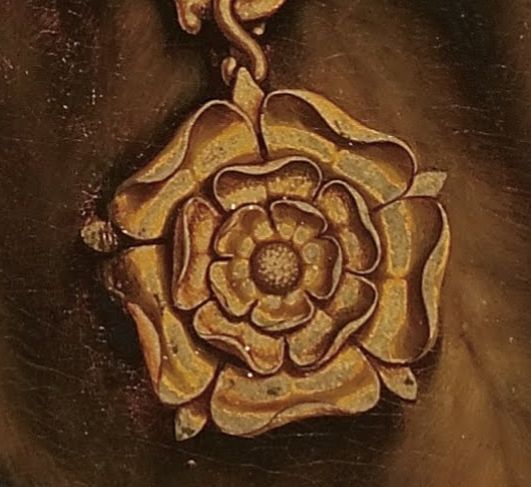
Since then, the patron Saint of England and his reptilian adversary have appeared almost every year on sovereigns with only a few notable exceptions. In 1989, the sovereign was issued with a striking one-year-only design to celebrate its 500th birthday. Sculptor Bernard Sindall wanted to echo the look of the original coin and depicted a front-facing and enthroned Queen Elizabeth II sitting in the Coronation Chair in full regalia. For the reverse, Sindall presented a modern crowned shield of the Royal Arms set in the centre of a double rose, which reflected the look of the Tudor original.
The Tudor Rose emblem is the rarest design to grace the reverse of the sovereign. It last appeared in 2024 to honour the 535th anniversary of the sovereign. The obverse displayed an enthroned portrait of King Charles III, the first enthroned portrait of a King ever to appear on a commemorative sovereign.
The Tudor Rose sovereign stands as a testament to the enduring power of symbols. From its origins as a unifying emblem in a divided kingdom to its modern revival, it bridges centuries of history, artistry and royal legacy that will continue to inspire and captivate collectors for generations to come.