
Victory in Europe Day, 1945
On 8 May 1945, the guns fell silent across Europe. After nearly six years of total war, Nazi Germany surrendered, and a battered but unbowed Britain stepped into the daylight of victory. Victory in Europe Day (VE Day) was an emotional outpouring of relief and a defining moment of national unity. At the heart of that unity stood the British monarchy, which had played a visible and deeply symbolic role throughout the war and in the celebrations that followed.
This is the story of how the Crown helped steady the nation in its darkest hour, and how, on that extraordinary day in May 1945, it stood shoulder to shoulder with the people in celebration.
The Crown in the Storm
When Britain declared war on Germany in September 1939, the monarchy, led by King George VI, was thrust into a position of immense responsibility. Unlike earlier conflicts, the Second World War brought the front line to Britain’s doorstep. The Blitz would devastate cities, morale would be tested daily, and the nation required not only military leadership but emotional resilience.
George VI, a reluctant king who had ascended the throne after the abdication crisis of 1936, proved to be precisely the figure Britain needed. His speeches, often delivered with great effort due to his stammer, were marked by sincerity and resolve. They resonated deeply with a population enduring rationing, separation, and the constant threat of bombing.
Working alongside him was his wife, Queen Elizabeth (later the Queen Mother), whose courage became the stuff of legend. Her morale-boosting visits and refusal to leave London reportedly caused Adolf Hitler to describe her as “the most dangerous woman in Europe”. When Buckingham Palace itself was bombed in 1940, she famously remarked that she was glad it had happened because now she could “look the East End in the face”. It was a powerful statement of solidarity with ordinary citizens who had suffered far worse.
Rather than retreat to safety, the royal family chose to remain in London for much of the war. This decision was strategic as much as it was symbolic. The King developed a close working relationship with his Prime Minister, Winston Churchill, and they met weekly throughout the conflict. Both shared the view that it was wrong for Britain to seek a negotiated peace with Hitler. Churchill later said of the King that “the care and thoroughness with which he mastered the immense daily flow of State papers made a deep mark on my mind”.
Leadership Beyond Politics
While wartime leadership is often associated with political figures such as Churchill, the monarchy provided the British people with guidance, stability and a welcome sense of reassurance that they would prevail.
The King and Queen undertook extensive tours of bomb‑damaged areas, hospitals and military installations. They met civilians who had lost their homes, soldiers recovering from wounds, and workers sustaining the war effort in factories. These visits brought comfort and hope when it mattered most and helped to humanise the institution of monarchy.
At a time when the future was uncertain, the royal family offered continuity. They embodied the belief that the values shared between Crown and country would survive the conflict.
Princess Elizabeth Steps Forward
Among the royal family, one figure emerged during the war who would come to define the monarchy for generations to come: Queen Elizabeth II, then Princess Elizabeth. Born in 1926, she came of age during the war years. While still a teenager, she made her first public broadcast in 1940, speaking to children who had been evacuated from their homes. Her message was one of reassurance and shared experience, as she, too, was living through the same uncertainty.
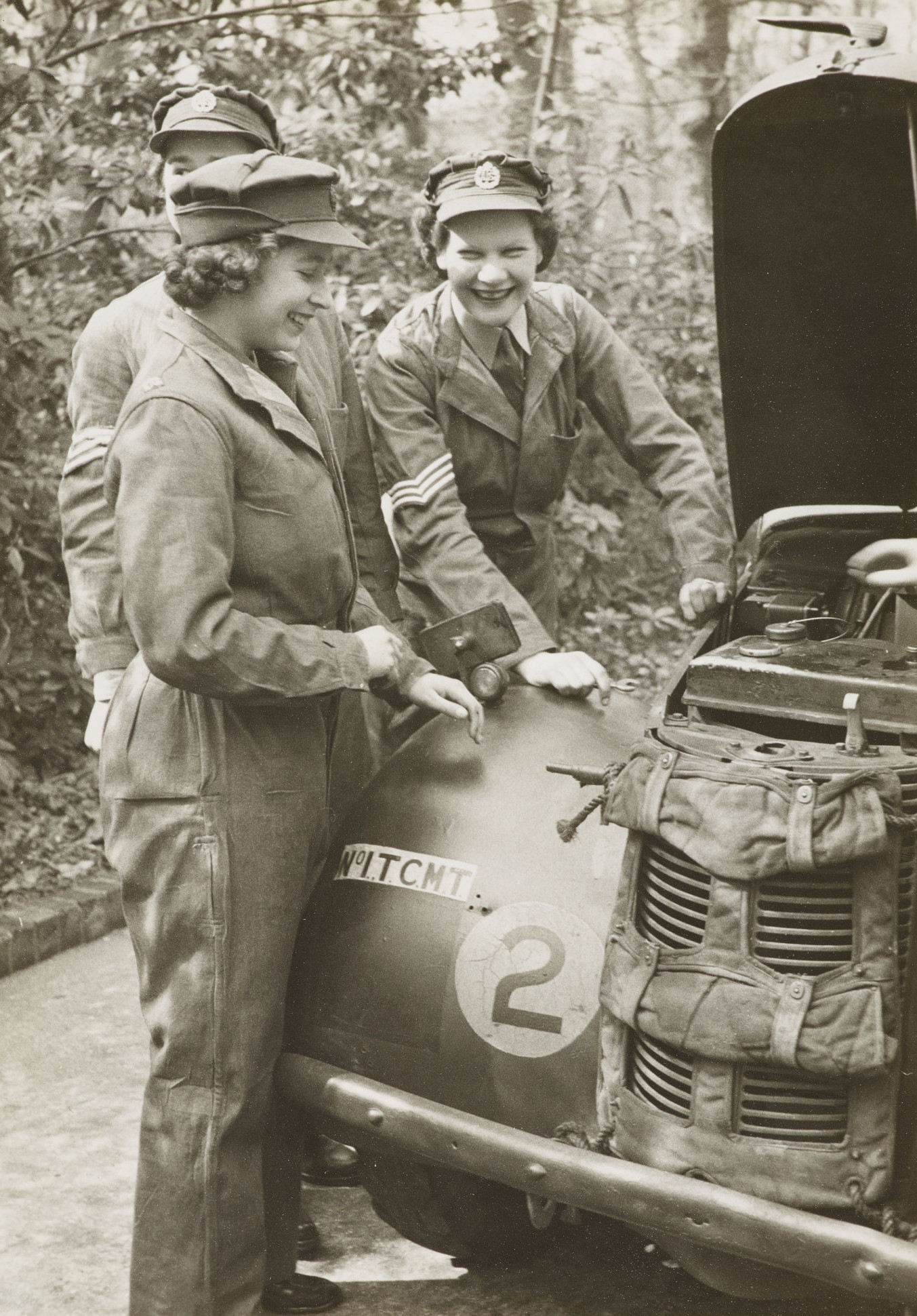
Princess Elizabeth’s contribution to the war effort did not stop at words. In 1945, at the age of 18, she joined the Auxiliary Territorial Service (ATS), becoming the first female member of the royal family to serve in the armed forces in a full‑time capacity. There, as inductee No. 230873, she trained as a driver and mechanic, learning to maintain and repair military vehicles. This included stripping and rebuilding engines, changing heavy tyres, replacing spark plugs and carrying out general maintenance. She was also trained to operate a range of vehicles, including trucks and ambulances.
At a time when millions of British women were entering the workforce to support the war effort, the future Queen’s decision to volunteer for the ATS sent a deliberate and powerful message that the royal family were doing their part. It was a masterclass in leadership by example. The Princess became a relatable figure: a symbol of youthful determination and national service.
A Nation Celebrates
When Germany surrendered on 8 May 1945, Britain erupted in celebration. After years of blackout curtains and air‑raid sirens, the streets filled with people singing, dancing and embracing strangers. That afternoon, Churchill delivered a radio broadcast in which he announced that “we may allow ourselves a brief period of rejoicing”.
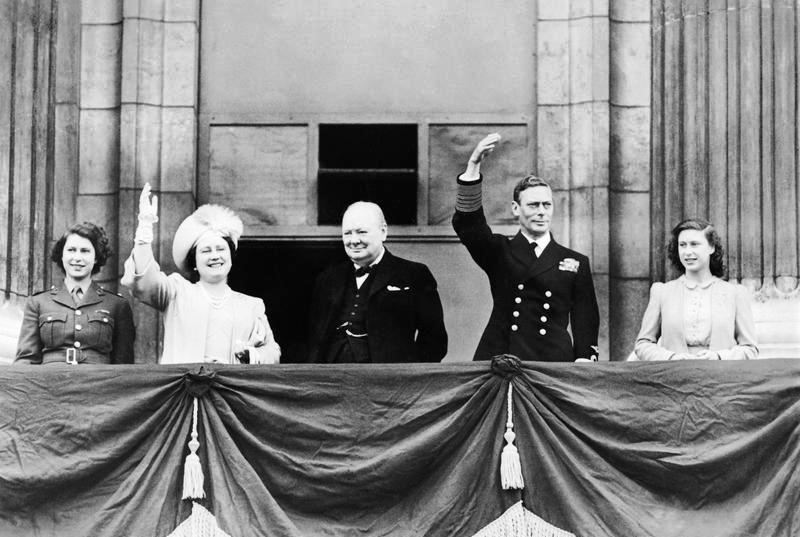
The focal point of the official VE Day celebrations was London, where vast crowds gathered outside Buckingham Palace and along The Mall. The King and Queen appeared on the balcony with their daughters, Princess Elizabeth and Princess Margaret. They were joined by Churchill, whose presence underscored the unity between Crown and government.
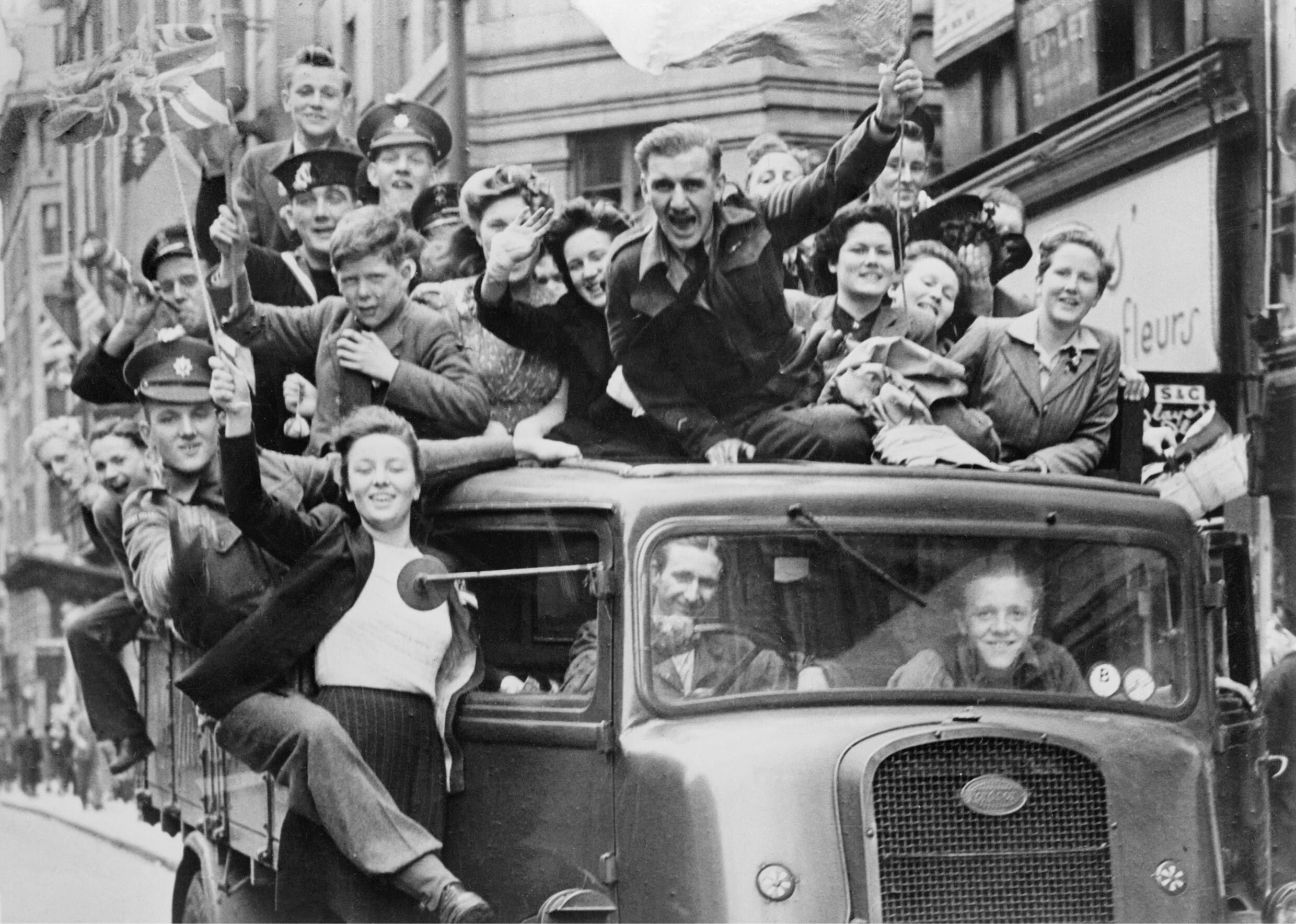
The crowd’s reaction was overwhelming. Cheers echoed through the streets as thousands waved flags and sang patriotic songs. The royal family returned to the balcony several times during the day, with each appearance reinforcing the bond between monarch and people. It was a shared moment of national identity. The royal family had stood with the country during its darkest days, and now they stood with it in victory.
Slipping into the Crowd
As night fell on VE Day, an extraordinary and much‑loved episode unfolded - one that would become a cherished anecdote in royal history. Princess Elizabeth and her younger sister, Princess Margaret, were granted permission by their parents to leave the palace and join the crowds celebrating in London.
Accompanied by a small group of aides, they ventured out incognito, blending into the sea of jubilant citizens. They walked the streets, linked arms with strangers and even joined conga lines as people danced through the night. For a few hours, they were simply young women celebrating alongside the nation. The future Queen would later describe it as one of the most memorable nights of her life.
This moment, perhaps more than any other, captures the essence of the monarchy’s role during the Second World War. King George VI and his young family showed that they were neither distant nor detached during Britain’s darkest hour. Instead, they helped to bind the nation together - through the devastation of war and into the light of victory.
The monarchy provided continuity in a time of upheaval, visibility in moments of crisis, empathy in the face of suffering, and unity across all levels of society. By the time victory was declared, the royal family had become a powerful symbol of national resilience, embodying the public spirit to keep calm and carry on.
For Queen Elizabeth II, the experiences of the war years, the example set by her parents, and her unforgettable night among the crowds left a lasting impression. Throughout her record‑breaking reign, she was known for her unwavering sense of duty to her people. Under her leadership, the monarchy became more accessible, more relatable and more closely attuned to the lives of ordinary citizens than ever before.
Click here to find the latest range of Queen Elizabeth II's coinage, from silver to gold, originals to commemoratives. Get your hands on the effigies that brought us together in times of darkness and showed us hope in times of need.