

Remembering The Great Push Forward
On 1 July 2026, Britain and the Commonwealth will remember the 110th anniversary of the beginning of the Battle of the Somme, one of the most significant and poignant chapters in military history. Today, the four-month battle is remembered not only for its scale and the staggering losses suffered across the fields of northern France, but also for the courage, resilience, and sacrifice demonstrated by the men who fought and died there.
Over the Top
British Field Marshal Douglas Haig (1861–1928) believed that the only way to defeat Germany on the Western Front was to wear them down through constant bombardment. He planned a major offensive for the Somme River valley in northern France in the summer of 1916. It was where the French and British armies met, and it was also where the German defences were strongest.
The offensive, which Haig described as ‘the great push forward’, began with a massive artillery bombardment in which 1,500 heavy guns shelled the German positions for a week. The British had also dug tunnels deep into No Man’s Land, and these were filled with explosives and detonated, leaving huge craters. The noise of the bombardment was said to have been heard 200 miles away in London.
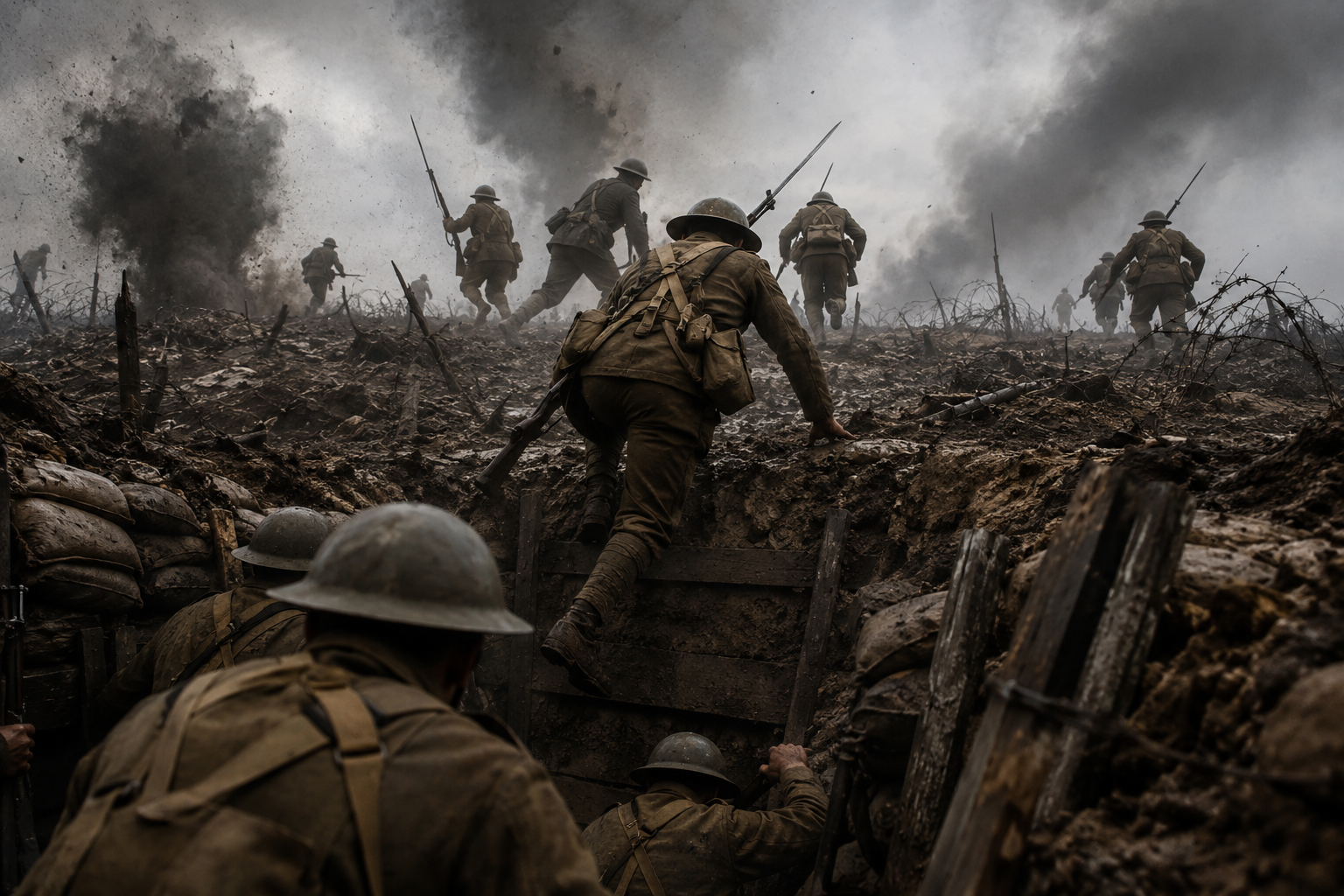
One young Bavarian Army corporal sent to fight at the Somme narrowly escaped death when a British shell exploded outside the entrance of his dugout, killing his comrades who were sleeping inside. Adolf Hitler would later describe the battle as being “more like hell than war”. He escaped with a leg wound and was sent to a German hospital to recover.
The Germans encased their machine guns in deep concrete bunkers, which protected them from the artillery bombardment. When it ended, they emerged from their dugouts and quickly prepared their weapons, ready for the infantry attack they knew would surely follow.
The first wave of troops from the British Empire was ordered ‘over the top’ at 7.30 am on 1 July 1916. Soldiers from the UK, Australia, India, South Africa, New Zealand, Newfoundland and Canada were ordered to march steadily in evenly spaced lines across No Man’s Land with rifles at the ready and carrying heavy packs.
The result was carnage.
The German machine guns massacred vast swathes of men, killing nearly 20,000 and wounding another 40,000 on the first day alone. It was the bloodiest day in the history of the British Army, but Haig pressed on regardless.
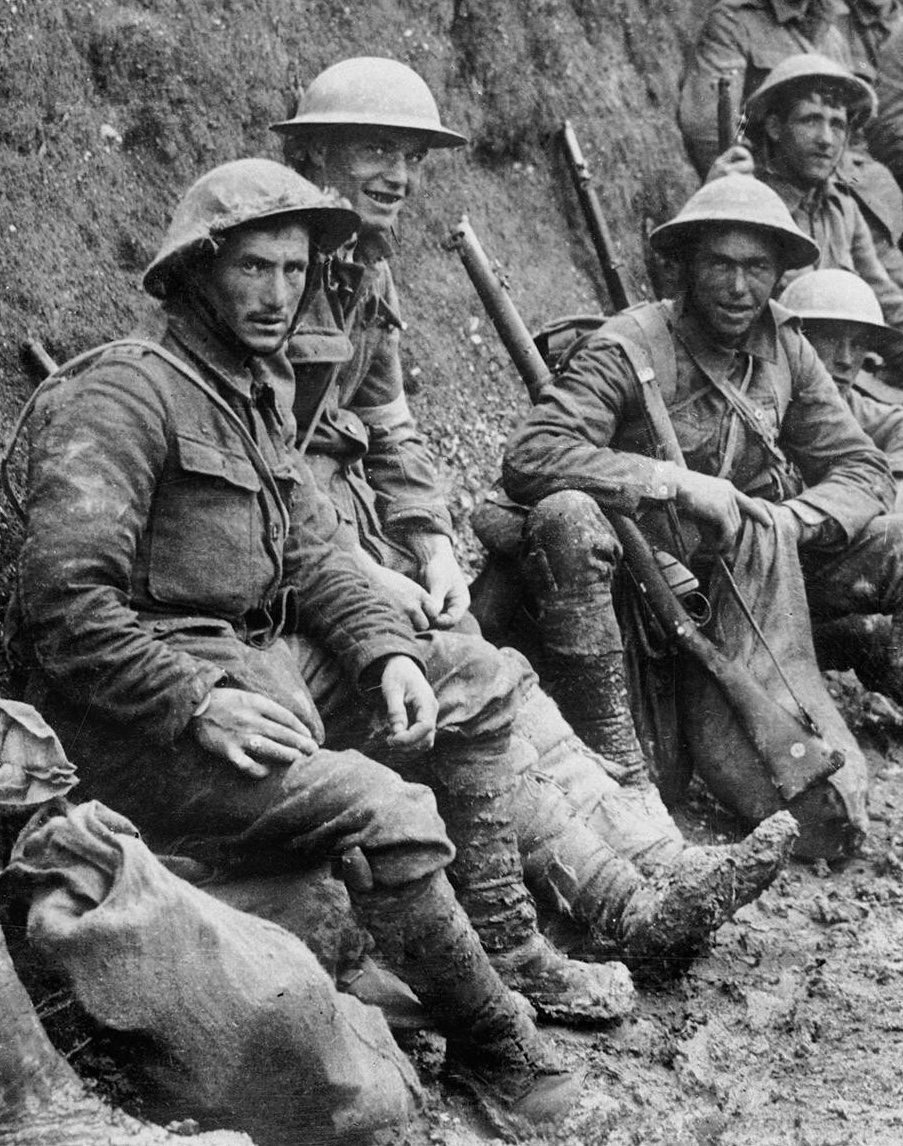
For the next four months, the British made at least ninety attacks across a landscape transformed by artillery, trenches, and unimaginable hardship. The autumn rains turned the battle-scarred ground into deep muddy swamps that drowned men and horses who stumbled into them.
Eventually, the deteriorating weather forced Haig to call off the offensive on 18 November. The Germans had been pushed back about five miles. The combined number of casualties in Haig’s ‘great push forward’ exceeded one million men, which led to him being labelled ‘the Butcher of the Somme’ for the rest of his life. It was a scale of loss that left an indelible mark on the twentieth century.
Back home, entire communities were devastated as friends, neighbours, workmates, and family members serving together in the famous ‘Pals battalions’ fell side by side. In towns and villages throughout Britain, the impact of the Somme would be felt for generations.
Commemorating the 110th Anniversary
Across 2026, commemorative events will once again bring people together to remember those who served and sacrificed during the Somme campaign. Services of remembrance will be held at war memorials throughout the United Kingdom, while visitors will travel to the battlefields of northern France to pay their respects at cemeteries, memorials, and sites that have become places of pilgrimage.
At the centre of these commemorations stands the Thiepval Memorial, where the names of more than 72,000 British and South African soldiers who have no known grave are inscribed in stone. More than a century after their deaths, these names continue to tell the story of lives cut short and futures never realised. Schools, museums, historical organisations, and local communities will also use the anniversary as an opportunity to educate new generations about the realities of the First World War and the sacrifices made by those who lived through it.
Keeping Their Stories Alive
The Battle of the Somme remains one of the defining events of the First World War and one of the most important acts of remembrance in British history. One hundred and ten years after the battle began, its legacy continues to shape how we honour military service and sacrifice. The fields where armies once fought have become places of reflection, where visitors from around the world gather to remember those who never returned home.
One of the most important aspects of modern remembrance is ensuring that individual stories are not lost to time. As the First World War passes further into history, archives and museums continue to uncover personal accounts that reveal the human experiences behind the statistics. Letters written home from the front, treasured family photographs, and soldiers’ diaries help us understand the hopes, fears, and determination of those who served. These stories remind us that every name carved onto a memorial represents a unique life and a family forever changed by war.
As we mark this significant anniversary, we pay tribute to the courage of all who served, remember those who made the ultimate sacrifice, and reaffirm our commitment to preserving their stories for future generations. The passage of time has not diminished the importance of the Somme; if anything, it has strengthened our responsibility to remember. For as long as their stories are told, the men of the Somme will never be forgotten.