

The Noble: Britain’s First Great Gold Coin
“Four things our Noble showeth unto me: King, ship, and sword, and power of the sea.”
Medieval poem
In July 1344, a remarkable chapter in British monetary history began. King Edward III (r. 1327–1377) introduced a new coin that would become one of the most famous and influential pieces of medieval currency: the gold noble.
The noble represented England’s growing economic strength, its expanding role in international trade, and the ambitions of a king determined to place England among the great powers of Europe. For over a century, it remained a cornerstone of English coinage and helped to establish a tradition that would lead to some of Britain’s most celebrated issues, including the sovereign.
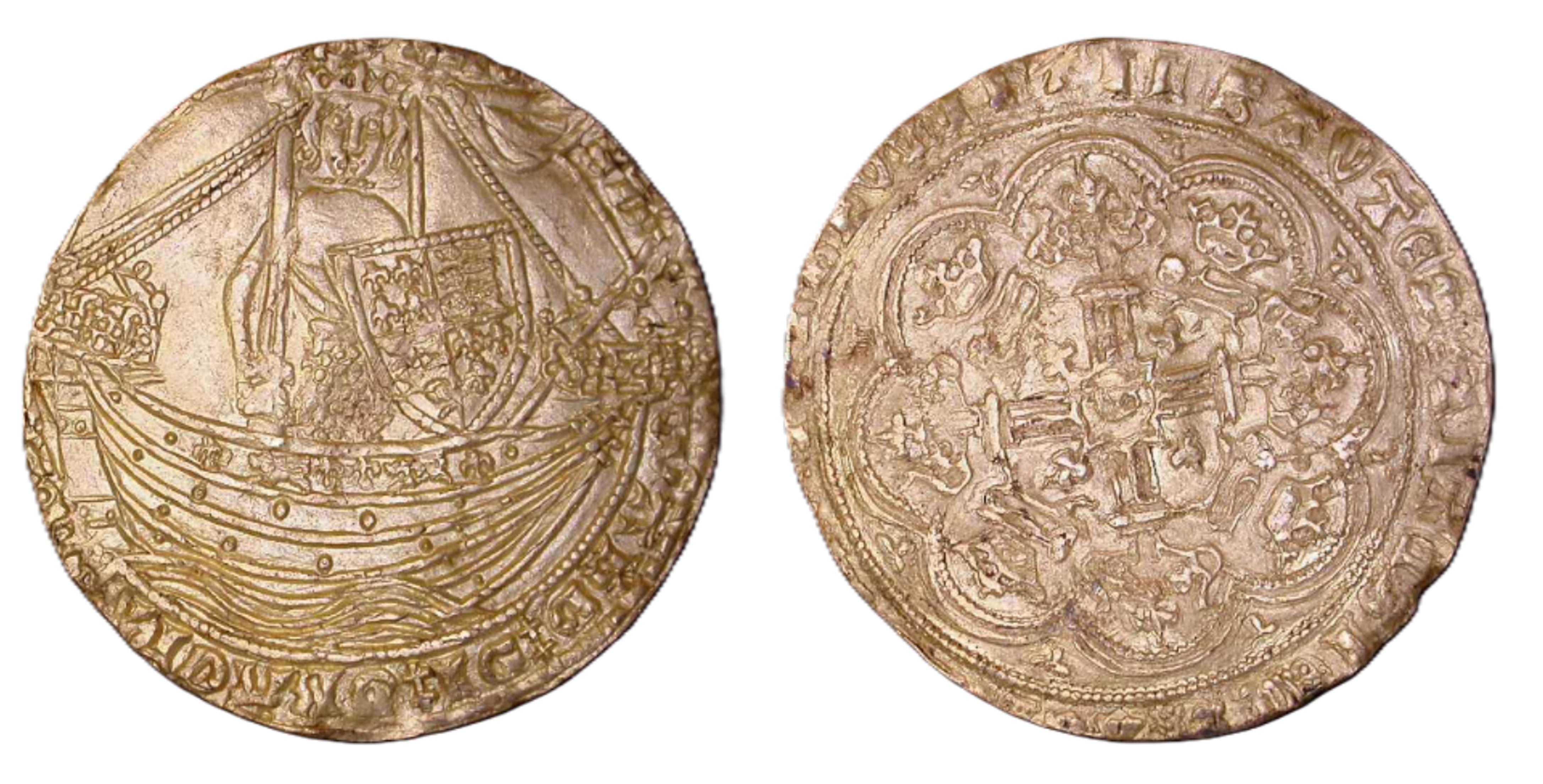
Today, the noble remains one of the most admired coins in British numismatics. Its story is made even more fascinating by its connection to another important anniversary. In 2026, collectors mark the 500th anniversary of the George Noble, a coin that introduced the image of Saint George slaying the dragon to English coinage for the first time.
England’s Search for a Gold Currency
For centuries following the Norman Conquest, England’s monetary system was dominated by silver coins. Gold coins were largely absent from everyday circulation, despite their widespread use elsewhere in Europe. Continental powers such as Florence, Venice, and France issued prestigious gold coins that were widely accepted in long-distance commerce.
Earlier attempts to establish a dependable, widely accepted gold currency in England had failed. A gold penny issued by Henry III in 1257 proved unsuccessful. In January 1344, King Edward III authorised an ambitious new gold coinage comprising the double florin, florin, and half florin, also known respectively as the double leopard, leopard, and helm (or half leopard). However, all were quickly withdrawn after only a few months because their official values did not reflect the market ratio between gold and silver, making them unattractive for commerce.
Undeterred, Edward introduced a revised gold coinage in July. The gold noble was heavier than its predecessors and became the first English gold coin to be produced in large quantities and to achieve lasting circulation.
A Noble Name
The noble carried a face value of six shillings and eight pence, equivalent to one-third of a pound sterling. To support everyday transactions, it was accompanied by a half-noble worth three shillings and four pence and a quarter-noble worth one shilling and eight pence.
The noble’s value was substantial in the fourteenth century, far beyond the ordinary transactions of most labourers, who would rarely have come into contact with one. They were more commonly used by merchants, nobles, and wealthy landowners. The coins occupied an important position within England’s developing commercial economy, facilitating large transactions both at home and abroad.
The coin earned its name from the Latin word nobilis, meaning ‘noble’ or ‘distinguished’, a fitting description for a high-value coin of impressive quality. Gold was considered a distinguished metal because it is highly resistant to corrosion and chemical reactions. Struck in almost pure (23-carat) gold and produced to an impressive standard for its time, the new coin quickly gained a reputation that extended far beyond England’s shores.
Design
The most striking feature of the noble was its design. The artistry was extraordinary for its age and remains one of the most distinctive designs seen on an English medieval coin. It was a sophisticated piece of political propaganda, with every element carefully chosen by the king to project his status and authority.
The obverse depicts Edward III standing aboard a ship, sword in one hand and shield in the other. This was a dramatic departure from traditional coin designs, which usually showed monarchs seated on a throne. The powerful image is widely believed to commemorate England’s naval victory over the French at the Battle of Sluys in June 1340. The decisive battle destroyed much of the French fleet and allowed England to dominate the English Channel.
The design projected royal authority and maritime power at a time when England was increasingly looking outward towards continental trade and military campaigns. By depicting himself armed on a ship, Edward III was declaring the Crown as master of the seas and protector of valuable trade routes.
The reverse featured an ornate floriated cross set within an elaborate decorative framework, accompanied by a Biblical quotation from the Gospel of Luke: IHC AUTEM TRANSIENS PER MEDIUM ILLORUM IBAT (“But Jesus, passing through their midst, went His way”). This Latin text carried both religious and symbolic meaning, implying that divine protection guided Edward III through danger. In medieval times, the phrase was also believed to function as a protective charm against thieves and counterfeiters, and it would later appear on the gold sovereign struck by Henry VII in 1489.
Why the Noble Was Important
The importance of the noble extends far beyond its gold content. It established a successful and sustainable gold currency in England, paving the way for later issues such as the ryal (1464), angel (1465), Tudor sovereign (1489), unite (1604), guinea (1663), and modern sovereign (1817).
The noble also strengthened England’s commercial standing abroad. European merchants were accustomed to conducting major transactions in gold, and the new English issue could stand alongside the respected currencies of Florence, Venice, and France.
The coin quickly became a symbol of national prestige. It projected the authority of the Crown and reflected England’s growing international confidence during the reign of Edward III. Its success was such that variants continued under successive monarchs, with modifications to weight and value reflecting changing economic conditions.
Nobles were also struck at the mint at Calais, the English-held port in France, including during Edward III’s Treaty Period of 1361 to 1369. Later issues continued under subsequent monarchs until the 1450s, making Calais an important part of the noble’s wider story.
National Icon
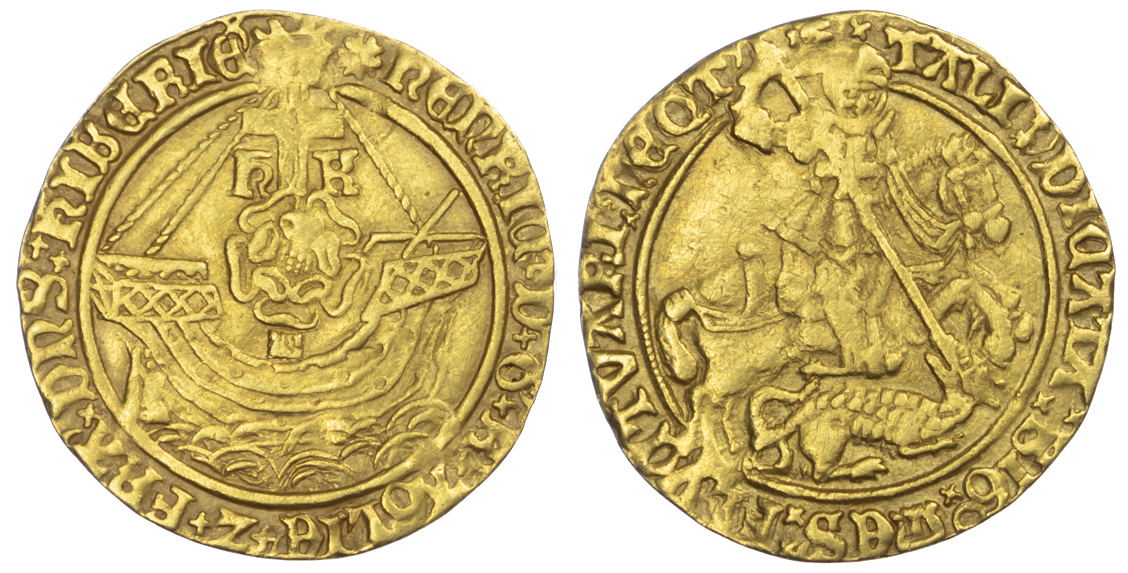
While the ship noble is rightly celebrated for having one of the finest designs in English coinage, another design holds a special place in British numismatic history. In 1526, Henry VIII introduced a new gold coin which became known as the George Noble. Also worth six shillings and eight pence, its significance lay not merely in its monetary value but in its imagery.
For the first time on an English coin, Saint George was depicted slaying the dragon. This image would become one of the most enduring symbols in British coinage. Saint George had long been associated with England, representing courage, faith, and the triumph of good over evil. By placing the saint on a gold coin, Henry VIII linked royal authority with one of the nation’s most powerful legends.
This year, we celebrate the 500th anniversary of this landmark moment in British numismatic art. Half a millennium later, Saint George and the dragon remain a familiar presence on British coinage, most famously through the celebrated design created by Benedetto Pistrucci for the modern sovereign in 1817. In many ways, the George Noble laid the foundations for a numismatic tradition that continues to this day.
A Lasting Legacy
Nearly seven centuries after its introduction, the gold noble remains a highly sought-after and iconic coin. It emerged from a period of experimentation and uncertainty to become England’s first truly successful gold coin. It facilitated trade, strengthened royal prestige, and displayed some of the finest artistry of the medieval age. Most importantly, it established a tradition of English gold coinage that would eventually lead to the angel, unite, guinea, and sovereign.
As collectors and historians mark the 500th anniversary of the George Noble, they also honour the wider legacy of the noble itself: a coin that helped transform England’s monetary system and gave British coinage some of its most enduring themes.
From the majestic ship noble of Edward III to the dragon-slaying imagery of the George Noble, these remarkable coins are miniature works of medieval art and enduring witnesses to the story of Britain itself.